

Shared house cleaning schedules can feel like a good idea in theory, but in practise they often fall apart surprisingly quickly. One person forgets their week, another person does half the task, and before long the rota is quietly ignored and people are passive aggressively swapping annoyed WhatsApp messages.
That doesn’t mean cleaning schedules can’t work. In many shared houses, a simple and clearly defined system can make shared spaces much easier to manage. The key is keeping the schedule realistic, specific, and easy for everyone to follow. Without a rota, cleaning often becomes the classic shared house standoff where everyone quietly waits for someone else to do it.
Here are a few ways to create a shared house cleaning schedule that actually works.
1. Create a simple rota
One of the easiest ways to divide cleaning fairly is with a rotating schedule. Each week, a different person is responsible for a particular area of the house. This helps keep people accountable if they have to mark off when they have completed a task.
For example:
Week 1
Housemate A – Kitchen
Housemate B – Bathroom
Housemate C – Living room
Week 2
Housemate B – Kitchen
Housemate C – Bathroom
Housemate A – Living room
This way everyone eventually takes responsibility for each space.
2. Be clear about what each task includes
Cleaning rotas often fail because the expectations are vague. If someone is assigned the kitchen, does that mean wiping the counters, cleaning the sink, sweeping the floor, or all of the above?
It helps to be explicit about what each role includes so everyone understands what “cleaning the kitchen” actually means.
For example, kitchen duties might include:
- wiping surfaces
- cleaning the sink
- sweeping or vacuuming the floor
- taking out the kitchen bin
Clear expectations prevent the awkward situation where one person thinks they’ve finished while everyone else quietly disagrees.
3. Combine cleaning tasks with related chores
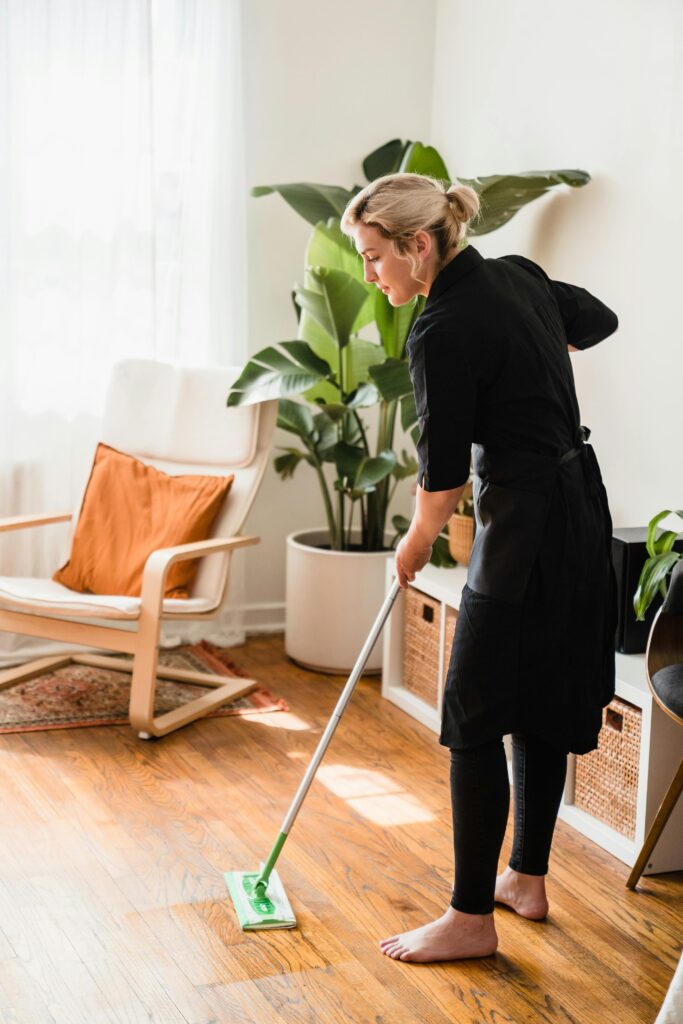
Another helpful trick is pairing cleaning responsibilities with smaller related tasks.
For example:
- The person responsible for the kitchen also takes out the kitchen bins.
- The person cleaning the bathroom empties the bathroom bin.
- The person responsible for the living room might tidy shared surfaces or vacuum.
Grouping tasks together keeps responsibilities clear and prevents small chores from being forgotten.
4. Keep the system simple
A complicated schedule with too many rules is unlikely to last long. In most shared houses, the best systems are the ones that are easy to remember and easy to follow.
A simple weekly rota with clearly defined tasks is usually enough to keep things running smoothly.
5. Accept that it won’t be perfect
Even the best cleaning schedule will occasionally slip. Someone might forget their week, or the kitchen might need an extra wipe down after a busy evening.
The goal isn’t perfection – it’s simply creating a system that makes shared spaces easier to maintain.
In many shared houses, a clear rota and a few agreed expectations can make a surprisingly big difference to how clean the house feels, without anyone having to take on all the responsibility. And it’ll avoid all those 10pm arguments about why you’ve just had to wipe down the bathroom surfaces yet again.